How DeFi Saver’s Automated Position Management Responded to 2025 Market Volatility
Executive Summary
This case study evaluates the performance, user adoption metrics, and risk-mitigation outcomes of non-custodial automation strategies across decentralized finance (DeFi) lending markets throughout 2025.
Using execution logs and platform data compiled in January 2026, this study analyzes how automated leverage management (Boost and Repay), Stop Losses, and cross-asset collateral switching protected user capital and optimized efficiency across Ethereum Mainnet, Arbitrum, and Base.
The Operational Problem: Human Latency vs. Onchain Cascades
In 2025, leveraged borrowers and liquidity providers operating on protocols like Aave, Compound, Morpho, and CurveUSD faced two distinct systemic risks:
- Liquidation Cascades: High-throughput layer-2 networks accelerated liquidations. During sharp market drawdowns, positions falling below critical Health Factors were liquidated within seconds, leaving manual operators with an impossibly small reaction window.
- Capital Drag: To safely avoid liquidations manually, users traditionally kept large, inefficient capital buffers (unnecessarily low Loan-to-Value ratios), which severely dragged down net yields and restricted capital efficiency.
Structural Analysis of Automation Workflows
The 2025 automation architecture utilized a modular execution model where positions remained fully non-custodial. Offchain triggers continuously monitored onchain conditions, executing specific rebalancing functions via flash loans and DEX aggregators the moment criteria were met.
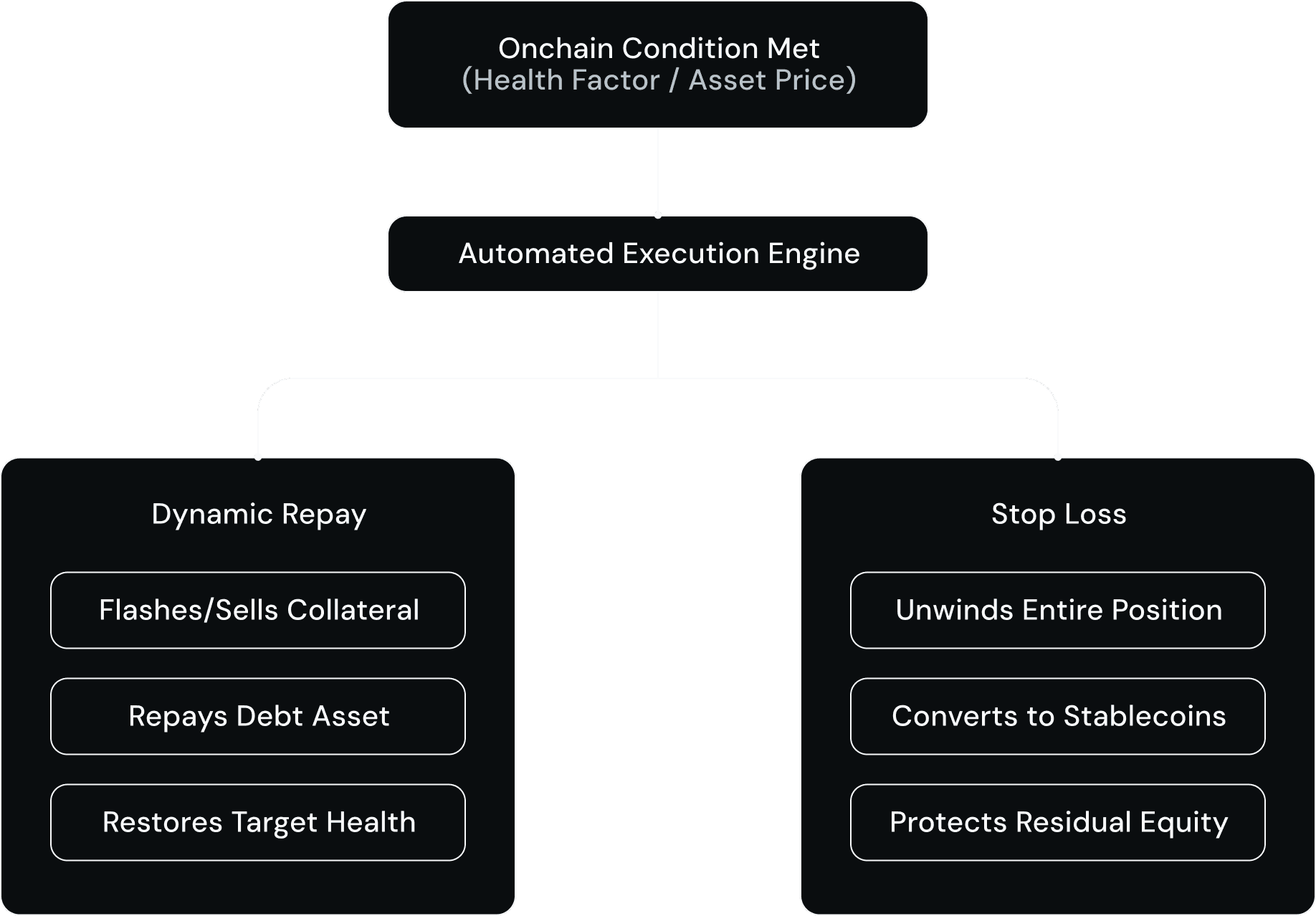
Strategic Implementations Monitored in 2025:
- Direct EOA Automation on L2s: Users bypassed the friction and deployment costs of dedicated smart contract wallets. Direct integration with Externally Owned Accounts (EOAs) on Aave v3 allowed retail-sized portfolios on Base and Arbitrum to execute granular micro-adjustments that would have been cost-prohibitive on Mainnet.
- Automated Collateral Shifting: During prolonged asset depreciation trends, users utilized rule-based triggers to automatically swap highly volatile collateral (e.g., ETH or wrapped staked assets) into stablecoins or lower-beta assets before positions neared liquidation thresholds.
- Yield-Backed Debt Protection: In specialized markets like Liquity and Maker/Sky, automated scripts drew down liquidity from yield-bearing capital pools (such as the Dai Savings Rate) dynamically to service debt interest and keep loan structures perfectly balanced.
Key Takeaways
- Automation Eliminates the Volatility Penalty: The historical data confirms that automated liquidation defense completely detaches a portfolio's safety from the user's physical availability, time zone, or network congestion.
- Higher Sustainable Yields: Because automation acts as an instantaneous safety net, users can confidently operate closer to theoretical maximum borrowing limits, maximizing capital efficiency without risking catastrophic penalties.
- Multi-Protocol Scale: By running automated logic across isolated or specialized markets (such as Morpho or CurveUSD), users successfully managed complex multi-protocol risk profiles entirely hands-free.